If you’re worried about an aging parent falling, the internet will try to sell you a device before it tells you anything useful. Search “fall prevention for seniors” and the first screen is pendants, watches, and cameras — products that, almost without exception, do nothing to prevent a fall. They respond to one. That distinction is the single most important thing to understand before spending any money.
This guide is about the part that actually moves the odds: the medical, environmental, and behavioral changes that reduce how often an older adult falls in the first place. We’ll get to technology — it has a real role, and we cover it honestly below — but it belongs near the end of the list, not the beginning.
A note on what this is. We’re independent researchers, not clinicians, and not your parent’s care team. What follows synthesizes the public guidance from the CDC, the National Institute on Aging, and the National Council on Aging into a framework you can act on. It is not medical advice, and the most important step in it is talking to your parent’s doctor. With that said, here is the order of operations that the evidence supports.
Start here: falls are not random, and they’re not just “getting old”
The most useful reframing a family can make is this: a fall is rarely a single event. It’s the result of a stack of risk factors that built up quietly, most of which are modifiable.
According to the CDC, falls are the leading cause of injury-related death for adults 65 and older, and roughly one in four older adults reports a fall each year. But the headline statistics obscure the practical point — the same agency’s STEADI framework (Stopping Elderly Accidents, Deaths & Injuries) exists precisely because fall risk is assessable and reducible. Clinicians using STEADI screen for a defined set of factors: previous falls, gait and balance problems, medication load, vision, blood pressure changes on standing, and home hazards.
You can work through the same factors as a family. The four sections below are ordered by evidence strength and cost-effectiveness — roughly, the cheapest and most effective interventions first.
1. The medical layer: get a real risk assessment and a medication review
This is the step families skip most often, and it’s the one a doctor can actually help with.
Ask for a falls risk assessment. A “yes” to any of three STEADI screening questions — has your parent fallen in the past year, do they feel unsteady when standing or walking, do they worry about falling — is enough to warrant a clinical assessment. Many primary care physicians will run a simple in-office test (such as the Timed Up-and-Go) and check for treatable contributors.
Get a medication review. This is one of the highest-value, lowest-cost moves available, and it costs nothing beyond an appointment. Several common drug classes raise fall risk:
- Sedatives and sleep aids
- Some antidepressants and anti-anxiety medications
- Certain blood-pressure medications, especially where they cause a drop in pressure on standing
- Anything that lists dizziness or drowsiness as a side effect
The risk compounds when several are taken together — a problem geriatricians call polypharmacy. Bring every medication, including over-the-counter drugs and supplements, to a pharmacist or physician for review (the “brown bag” review). The goal isn’t to stop necessary medication; it’s to find the combinations that are quietly degrading balance.
Check vision and feet. An out-of-date eyeglass prescription, undiagnosed cataracts, or simply ill-fitting footwear and long toenails are all documented contributors. These are unglamorous and easy to address.
If you do nothing else in this guide, do this section. It’s free, and it addresses causes the most expensive gadget cannot touch.
2. The home layer: fix the environment before you furnish it with electronics
Home hazards are the most visible fall risk and, dollar for dollar, among the most worthwhile to fix. The bathroom and the night-time trip from bed to toilet are among the most commonly cited settings for serious falls.
Work through the home room by room. The recurring offenders:
| Hazard | Fix | Rough cost |
|---|---|---|
| Loose throw rugs | Remove, or secure with double-sided tape / non-slip backing | $0–20 |
| Dim lighting, dark hallways | Brighter bulbs, motion-activated night lights on the bed-to-bathroom path | $15–60 |
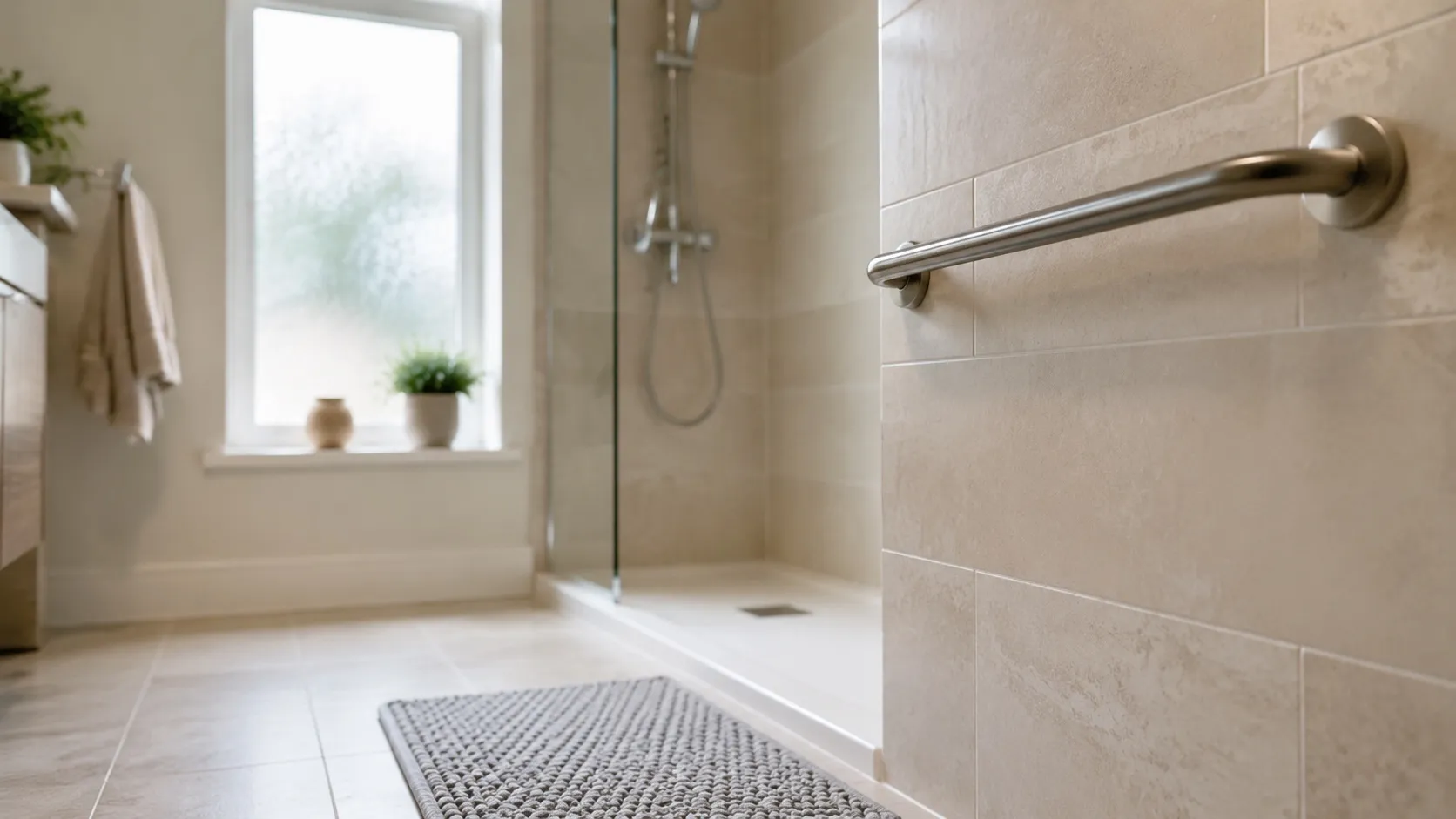
| No grab bars in bathroom | Install bars at toilet and inside the shower (anchored to studs, not suction-cup) | $30–150 |
| Slippery tub / shower floor | Non-slip mat or adhesive strips, a shower chair if standing is tiring | $20–80 |
| Clutter and cords in walkways | Clear paths; route cords along walls | $0 |
| Stairs without handrails | Secure handrails on both sides; mark step edges with contrast tape | $50–300 |
| Reaching for high shelves | Move daily-use items to waist height; remove the step stool | $0 |
A few of these deserve emphasis. Grab bars must be anchored into wall studs — suction-cup bars give a false sense of security and can release under load, which is worse than no bar at all. Lighting is the cheapest high-impact fix: a motion-activated night light between the bedroom and bathroom addresses the exact scenario — a disoriented, half-asleep person navigating in the dark — where many night-time falls happen.
For families who want a structured walkthrough, the CDC publishes a home fall-prevention checklist, and an occupational therapist can do a professional home assessment — whether it’s covered depends on the parent’s insurance plan, so check before assuming. This is where the home safety pillar overlaps — environmental sensors complement, but never replace, the physical fixes above. For a focused walkthrough of which sensors actually pay off for an older adult — smoke and CO first, then water, temperature, and motion — see our companion guide on home safety sensors for an aging parent.
3. The body layer: the intervention with the strongest evidence
If section 1 is the most overlooked and section 2 is the most cost-effective, this is the one with the deepest research behind it.
Reviews of clinical trials consistently find that exercise programs which challenge balance and build lower-body strength reduce both the rate of falls and the number of people who fall. The two most-studied formats:
- Tai Chi, which trains slow, controlled weight shifts and has a notably strong record specifically for fall reduction.
- Strength-and-balance programs such as the Otago exercise program, often delivered through physical therapy or community senior centers.
The mechanism is straightforward: falls happen when balance is challenged beyond what the body can recover from. Training the recovery — leg strength, ankle stability, the reflexive steps that catch a stumble — raises the threshold.
The practical obstacles are real. Many older adults are sedentary, afraid that exercise will cause a fall, or resistant to anything that looks like a class. Two things help: a referral to physical therapy gives it medical legitimacy, and many areas have free or low-cost evidence-based programs (the National Council on Aging maintains directories of community fall-prevention classes). The point is not athletic performance; it’s that consistent, balance-focused movement is the closest thing to a foundation that fall prevention has.
4. The technology layer: where devices help, and where they’re oversold
Now the part the marketing leads with. Used correctly, technology is a useful complement to the three layers above. Used as a substitute, it’s a false comfort. Here’s an honest breakdown of the categories.
What genuinely helps prevent falls:
- Automated lighting. Motion-activated lights and smart bulbs on the night-time path are technology that actually prevents falls, by addressing the dark-navigation scenario directly. Low cost, high return.
- Better mobility aids. A properly fitted cane, walker, or rollator — fitted by a physical or occupational therapist, not bought blind — reduces falls for people who need them. The fitting matters more than the brand.
What helps a remote family member, indirectly:
- Activity and motion sensors. Passive sensors that learn a parent’s routine can flag changes that often precede falls — reduced activity, more night-time movement, skipped meals. For an adult child supporting a parent from a distance, this is the most useful sensor category, and it’s the focus of our remote monitoring pillar. It’s early warning, not prevention.
- AI fall-detection cameras. Newer systems use cameras and on-device analysis to detect falls without a wearable. They can be valuable for people who won’t wear a pendant, but they raise real privacy questions, work only where the camera sees, and still detect rather than prevent.
What responds to a fall but does not prevent one:
- Medical alert pendants and fall-detection wearables. These are a safety net for after a fall — they shorten the dangerous gap between a fall and help arriving, which matters enormously for an older adult living alone. But they do not lower the odds of falling. We cover how to choose one in How to Choose a Medical Alert System for an Aging Parent — and the central caution there bears repeating here: fall detection reliably catches hard falls but misses many slower descents, so it is a backup to the wearer pressing the button, not a guarantee.
The category confusion — buying a pendant and believing you’ve “handled” fall prevention — is a costly mistake, because it leaves every actual risk factor untouched while feeling like progress.
5. The safety net: plan for the fall that happens anyway
Even a well-executed prevention plan reduces falls; it doesn’t eliminate them. The remaining layer is making sure that when a fall does happen, help arrives quickly.
Geriatric medicine has a name for the worst outcome here: the “long lie” — an older person who falls, can’t get up, and lies undiscovered for hours. The longer someone lies undiscovered, the worse the outcomes, as dehydration, pressure injuries, and muscle breakdown become real risks. This is the specific problem that medical alerts and check-in systems exist to solve, and it’s why a safety net belongs in any complete plan even when prevention is going well.
Match the safety net to your parent’s life: a mobile, GPS-enabled help button for someone still active outside the home; an in-home system or daily check-in routine for someone largely homebound. The medical alert framework walks through that decision.
Red flags and marketing traps
A few patterns that should make you slow down:
- “Fall prevention device” that is actually a fall detector. Read the description carefully. If it activates after a fall, it’s a safety net, not prevention. Both are fine — but know which you’re buying.
- Suction-cup grab bars marketed for “easy installation.” Convenient and unreliable under real load. Anchor to studs.
- Wearables sold on fear with no mention of exercise, medication, or home fixes. A vendor whose entire pitch is “peace of mind” is selling the feeling, not the outcome.
- “Clinically proven” with no citation. Ask proven by whom, and to do what — prevent falls, or detect them?
- High-pressure, senior-targeted sales calls. The FTC has documented high-pressure sales tactics aimed at older adults. A legitimate purchase can wait a day.
What to do next
In priority order — cheapest and most effective first:
- Book a medical visit for a falls risk assessment and a full medication review. Bring every pill bottle.
- Walk the home with the checklist above. Fix lighting and remove loose rugs the same day; plan grab-bar installation this week.
- Find a balance-and-strength program — a physical therapy referral or a community Tai Chi or Otago class.
- Add automated lighting on the bed-to-bathroom path.
- Then, and only then, choose a safety net — a medical alert or check-in system matched to how much of your parent’s life happens outside the home.
- Read our methodology page to see how we evaluate the devices in steps 4 and 5, and check the fall prevention pillar for specific product evaluations as we publish them.
The order is the point. Most families do this list backward — they buy the device first and never get to the medical review. Doing it in this order costs less, works better, and the gadget you eventually buy does the job it’s actually good at.
Further reading
For the underlying data and clinical guidance referenced throughout:
- CDC — Older Adult Falls Data: incidence, demographics, and outcome statistics.
- CDC STEADI: the clinician-facing fall-risk screening and prevention framework, useful for understanding how doctors assess risk.
- National Institute on Aging — Falls and Falls Prevention: patient-friendly prevention guidance, including home modifications.
- National Council on Aging — Falls Prevention: directories of community-based, evidence-based fall-prevention programs.
- AARP — Caregiving Resources: consumer-facing caregiver research and guidance.